
How synff worksIt reads what people wrote about records.
Most music apps learn from what you play. synff reads how people write about records instead: the reviews that say how an album feels, where it came from and who critics heard in it. Tell it the artists you care about and, when you ask, it hands you six albums, each with a reason you can read.
Why the best map of music is written in wordsA1
Take one reason apart.
Every record in a Drop arrives with a reason. This Drop opens on Thundercat’s It Is What It Is. Below, that one pick is taken apart into what its reason is made of.
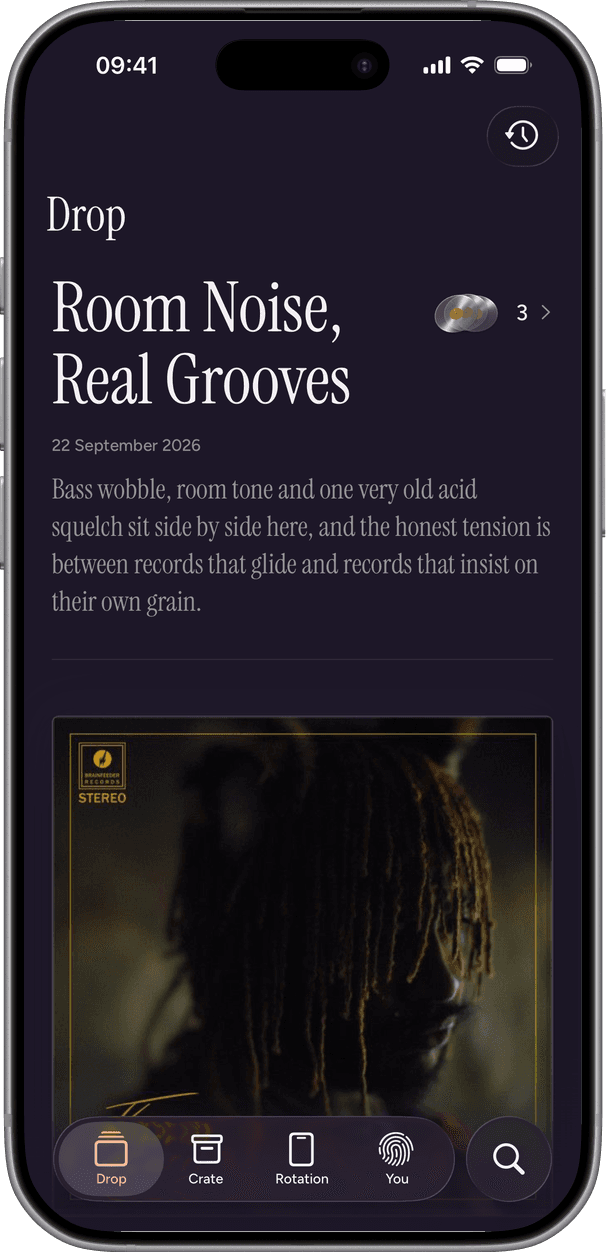
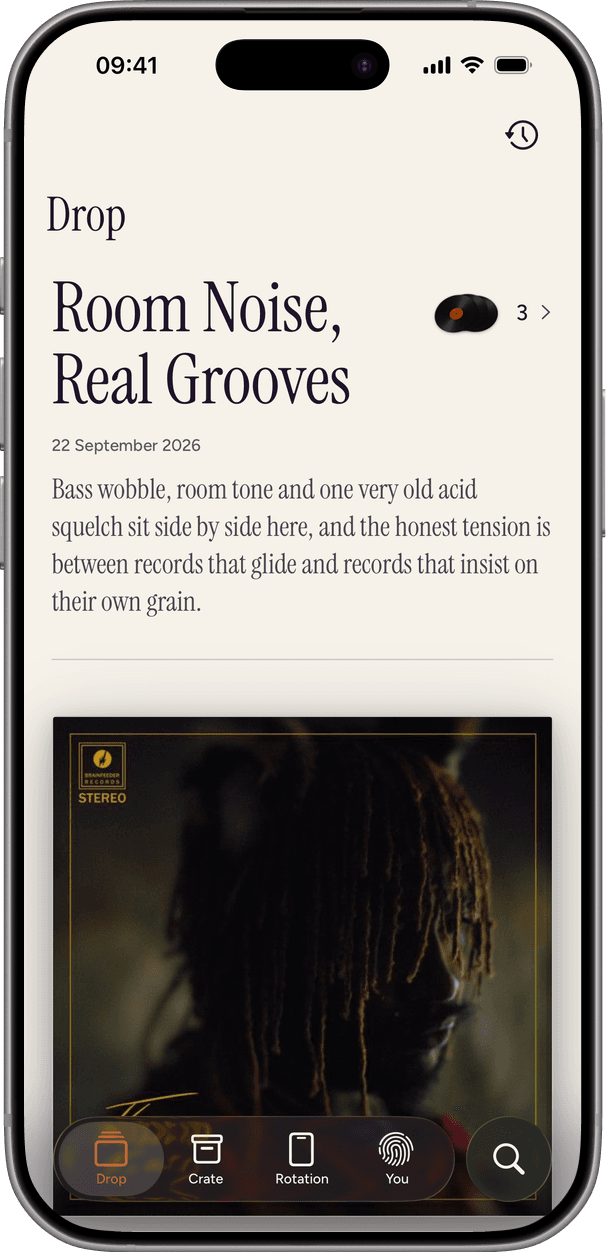
It Is What It Is, taken apart
What it is
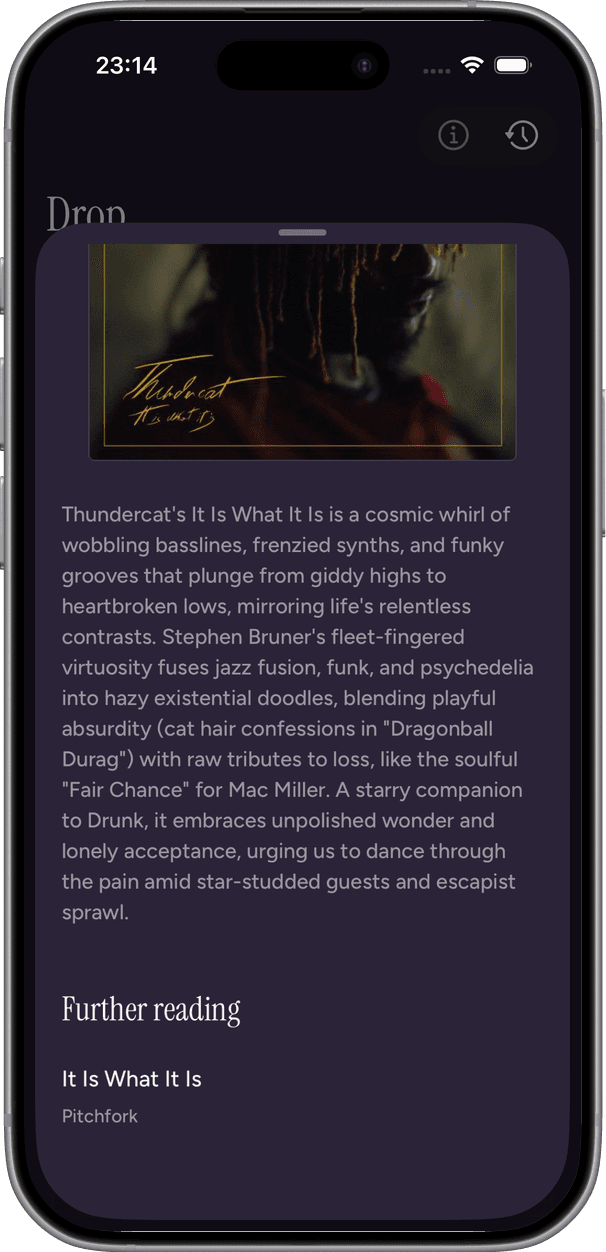
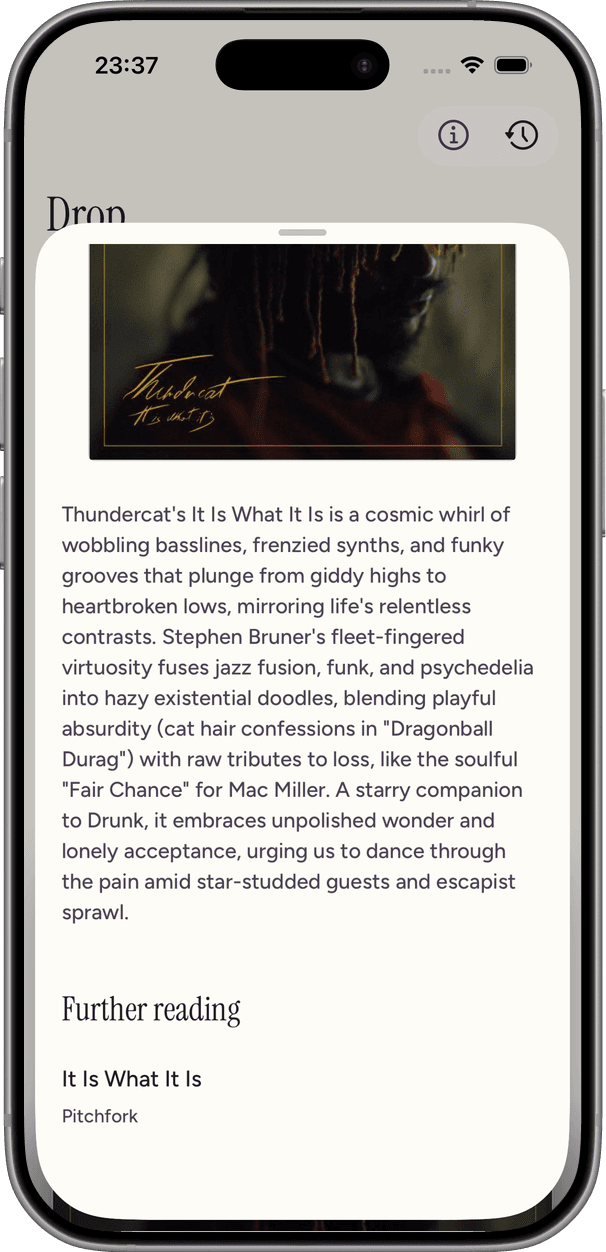
Tap the record and its sheet opens: its story, with further reading from the writers who covered it.
How it feels
Each mark is a word from its reviews in 8 publications, placed from calm to charged and light to dark. Choose a word to see who used it.
Why you
YoursThis part needs your artists.
Every reason in a Drop also says why the record fits you, from the artists you choose and what you decide at Recap. We can’t print that here. The app writes it for you.
Start with your artists
The reason in your Drop is written from evidence like this.
A2
Who critics heard in whom.
When a critic hears one artist in another’s record, names a collaborator or places two artists in the same scene, synff keeps that sentence, with who wrote it and when. Following those connections is how one artist can lead you to the next.
Untrue, 2007
“Ah yes, Burial: you couldn’t not mention him, really.”
Pitchfork on Andy Stott ·
So when did critics start hearing Burial in everyone else? Here is one review a year from our archive that reached for him, in the order they were written.
2009
“the beats do owe a lot to Burial.”
Pitchfork on Moderat ·
Read the review (opens in a new tab)2010
“not unlike something out of Burial’s repertoire and frankly just as good.”
Pitchfork on Flying Lotus ·
2011
“human beyond Burial’s no-show ghostliness”
Beats Per Minute on James Blake ·
Read the review (opens in a new tab)2012
“ghostly pitch-shifted vocals, reminiscent of the Knife and Burial”
Pitchfork on Purity Ring ·
Read the review (opens in a new tab)
Critics heard Burial in all of them.
Everything here is scoped to the writing synff has read, so “earliest” means earliest in our archive, not in history. A comparison is something a critic wrote, never a claim about who shaped whom.
Seven reviews from Pitchfork and Beats Per Minute, 2009 to 2012.
It is one of our Stories, which we also tell as short films on TikTok.
Watch the series on TikTok (opens in a new tab)Three kinds of connection
In the app, each of an artist’s connections is drawn with one of three lines, and a line grows heavier as more publications make the same connection.
Made music with
Band members, collaborators and people who played on each other’s records.
Covers and remixes
One artist recording, remixing or sampling another’s music.
Critics placed beside
Heard in, compared with or from the same scene, as a critic put it. Every review above is one of these.
B1What synff doesn’t do
We show our working. We never sell a place in it.
Every reason keeps its sources, and the rest of the deal is just as plain. Here it is, itemised.
What we don’t do
- We don’t Play the music
Each record opens in the listening service you already use. There’s no streaming account to connect.
- We don’t Watch what you play
Your taste starts from what you choose: the artists in your Rotation, the albums in your Crate, your notes and your Recap. A play count never becomes a statement about your taste.
- We don’t Show you ads
No. There are no ads in synff, so your attention stays on the record.
- We don’t Sell your data
We never sell personal data, and advertisers never see your taste.
- We don’t Sell a place in a Drop
Nobody pays to be recommended. Some shops in Find a copy pay us a commission when you buy, and it never changes what we recommend or the order shops appear in.
- We don’t Change picks for Supporters
Supporter adds room for four Drops instead of one, Vibe Finder and a copy of the annual magazine once it is printed. It never changes what gets recommended.
Thank you for listening.
B2
AI points at the art. It never makes it.
Where we use it
AI is good at reading. We use it to pull out what matters in how people have written about music: how a record feels, and who critics heard in it. It is also good at summarising when it is held to its sources, so we use it to write short summaries that make you curious about the writing behind them, and point you to writing about the record. And we use it to fit your recommendations, and what we say about them, to what you have told us you like and don’t.
Where we don’t
No generated music, ever. We don’t train models on the writing we read, and the models we use run with zero data retention: they keep nothing from what they read.
Why
The trouble with generated music isn’t that a machine is involved. It’s that it stands in for the people who make music. synff uses AI the other way round: to read what people wrote about records, and send you to them.
B3
Questions, answered plainly.
Where do the reasons come from?
From two places: what writers have published about each record, and what you tell the app. synff reads reviews for how a record feels, where it came from and who critics heard in it, then weighs that against the artists you choose and what you decide at Recap.
What is a Drop?
Six albums, when you ask for them, each with a reason. You keep a Drop for as long as you like, and a credit for the next one comes back each Monday.
What is a semantic album profile?
A description of how a record feels, in the words written about it. synff gathers the words critics used, such as hazy, ominous or propulsive, keeps which publications used each one, and places them from calm to charged and light to dark.
What is artist lineage?
The documented connections between musicians: the artists critics heard in someone’s records, the people they made music with, the scenes they shared. Every connection keeps its source and is scoped to the writing synff has read, so “earliest” means earliest in the archive, not in history.
How is this different from audio similarity or genre tags?
Audio similarity finds recordings that sound alike, and genre tags sort style names. synff is more interested in context: who critics heard in whom, how a record is described, and the choices you keep making.
Why does synff send me to buy records?
Music is art, and the people who make it should be paid for it. When a record lands, Find a copy groups the places to buy it by who they support: the artist or label, selected music shops, and collector marketplaces.
Further reading
- Modeling Artist Influence for Music Selection and Recommendation: A Purely Network-Based Approach (opens in a new tab), Elena Badillo-Goicoechea: review-based artist networks and recommendation.
- Semantic Computing of Moods Based on Tags in Social Media of Music (opens in a new tab), Pasi Saari and Tuomas Eerola: describing mood from the words people attach to music.
Bring your artists. We’ll bring the reasons.
Start with the ones you keep coming back to, then ask for your first Drop.
“I’ve been able to get out of my rut and actually SEE what I like.”
Scan to open synff on your phone.